Wednesday, October 31, 2007

El oso, la mona y el cerdo

En el Siglo XVIII en España, se introduce la literatura didáctica. Las normas literarias de la Península experimentan el resultado del dominio francés en Europa y la poesía pasa a tener un carácter educativo. En este período las fábulas se hacen populares pues presentan una enseñanza, la moraleza.
**
EL OSO, LA MONA Y EL CERDO
Tomás de Iriarte

Un oso, con que la vida
se ganaba un piamontés,
la no muy bien aprendida
danza ensayaba en dos pies.

Queriendo hacer de persona,
dijo a una mona: «¿Qué tal?»
Era perita la mona,
y respondióle: «Muy mal».

«Yo creo», replicó el oso,
«que me haces poco favor.
Pues ¿qué?, ¿mi aire no es garboso?
¿no hago el paso con primor?».

Estaba el cerdo presente,
y dijo: «¡Bravo! ¡Bien va!
Bailarín más excelente
no se ha visto, ni verá!».

Echó el oso, al oír esto,
sus cuentas allá entre sí,
y con ademán modesto
hubo de exclamar así:

«Cuando me desaprobaba la mona,
llegué a dudar;
mas ya que el cerdo me alaba,
muy mal debo de bailar».

Guarde para su regalo
esta sentencia el autor:
si el sabio no aprueba, ¡malo!
si el necio aplaude, ¡peor!

Monday, October 8, 2007

Instrucciones para subir una escalera

Julio Cortázar transforma la simple subida de una escalera en un ejercicio de imaginación, peldaño tras peldaño. Reconocido internacionalmente, Instrucciones para subir una escalera, 1962, ultrapasa el convencionalismo literario para graduarse como uno de los ensayos más comentados de la literatura hispanoamericana. ¡Aprovechad!
**
Instrucciones para subir un escalera


Nadie habrá dejado de observar que con frecuencia el suelo se pliega de manera tal que una parte sube en ángulo recto con el plano del suelo, y luego la parte siguiente se coloca paralela a este plano, para dar paso a una nueva perpendicular, conducta que se repite en espiral o en línea quebrada hasta alturas sumamente variables. Agachándose y poniendo la mano izquierda en una de las partes verticales, y la derecha en la horizontal correspondiente, se está en posesión momentánea de un peldaño o escalón. Cada uno de estos peldaños, formados como se ve por dos elementos, se sitúa un tanto más arriba y adelante que el anterior, principio que da sentido a la escalera, ya que cualquiera otra combinación producirá formas quizá más bellas o pintorescas, pero incapaces de trasladar de una planta baja a un primer piso.
Las escaleras se suben de frente, pues hacia atrás o de costado resultan particularmente incómodas. La actitud natural consiste en mantenerse de pie, los brazos colgando sin esfuerzo, la cabeza erguida aunque no tanto que los ojos dejen de ver los peldaños inmediatamente superiores al que se pisa, y respirando lenta y regularmente. Para subir una escalera se comienza por levantar esa parte del cuerpo situada a la derecha abajo, envuelta casi siempre en cuero o gamuza, y que salvo excepciones cabe exactamente en el escalón. Puesta en el primer peldaño dicha parte, que para abreviar llamaremos pie, se recoge la parte equivalente de la izquierda (también llamada pie, pero que no ha de confundirse con el pie antes citado), y llevándola a la altura del pie, se le hace seguir hasta colocarla en el segundo peldaño, con lo cual en éste descansará el pie, y en el primero descansará el pie. (Los primeros peldaños son siempre los más difíciles, hasta adquirir la coordinación necesaria. La coincidencia de nombre entre el pie y el pie hace difícil la explicación. Cuídese especialmente de no levantar al mismo tiempo el pie y el pie). Llegado en esta forma al segundo peldaño, basta repetir alternadamente los movimientos hasta encontrarse con el final de la escalera. Se sale de ella fácilmente, con un ligero golpe de talón que la fija en su sitio, del que no se moverá hasta el momento del descenso.

Monday, October 1, 2007

Rima XI

RIMA XI
Gustavo Adolfo Bécquer

—Yo soy ardiente, yo soy morena,

yo soy el símbolo de la pasión,

de ansia de goces mi alma está llena.

¿A mí me buscas?

— No es a ti, no.


—Mi frente es pálida, mis trenzas de oro:

puedo brindarte dichas sin fin,

yo de ternuras guardo un tesoro.

¿A mí me llamas?

—No, no es a ti.


—Yo soy un sueño, un imposible,

vano fantasma de niebla y luz;

soy incorpórea, soy intangible: no puedo amarte.

—¡Oh ven, ven tú!

Saturday, September 15, 2007

Me Talk Pretty One Day

Me Talk Pretty One Day Book Review


Back in 2005, I had a book called “50 Essays” for my rhetoric and composition class. The book was a compilation of essays that we had to respond on. Among those essays, there was one entitled Me Talk Pretty One Day, from David Sedaris. It was my second semester as a college student in the United States and although I liked literature, I read the essays just for the grade. No pleasure on reading those.

But that story in particular caused me to read it a second time.

In Me Talk Pretty One Day, Sedaris writes about his attempts to learn French. He describes the frustation of trying to learn a foreign language when simple daily tasks become a great challenge. Struggling. Trying to talk pretty. Perhaps, writing pretty one day.

Two years passed by and one day, at 5 am, while zombiying around in the Salt Lake City, I decided to run to the bookstore in search for anything to entertain myselft. I was waiting for a flight that would take to Portland, Maine.

As I complete my search through the magazine section unsuccessfully, I approach the book shelves and soon enough I saw a title I immediately recognized, Me Talk Pretty One Day by David Sedaris, sitting just next to Al Gore’s An Inconvenient Truth.

I flipped through the pages and although I had long wanted to read Al Gore’s book, I decided to purchase Sedaris’ instead.

I was tired, under rested and had a book on my hands and a pillow hanging off my backpack. Reading the book at that time did not seem like good idea, but I opened the book and read the first paragraph of an essay entitled “Go Carolyna.”

What a funny book!

Sedaris stories are so personal. He welcomes you into his family recounting tales with effortless wit. The stories contained in Me Talk Pretty One Day are unconventionally funny, yet simple and captivating. At the same time, Sedaris’ essays explore the human condition and family ties.

He has the ability of making you think you are one of his closest friends.
It’s like stumbling into a grocery shop in Manhattan and asking,

“Hey David, How’s Hugh doing?”

Me Talk Pretty One Day is the culmination of artistic spontaneity, quality writing and humor at its best.

Favorite tales include:

Go Carolina
Giant Dreams, Midget Abilities
See You Yesterday
Me Talk Pretty One Day
Jesus Shaves
The Tapeworm Is In
The Late Show

..:..:..:..:..:..:..:..:..:..:..:..:..:..:..:..:..:..:..:..:..:..:..:..:..:

Enjoy the reading of “Big Boy.”

Big Boy
by David Sedaris
(excerpt from Me Talk Pretty One Day)

It was Easter Sunday in Chicago, and my sister Amy and I were attending an afternoon dinner at the home of our friend John. The weather was nice, and he'd set up a table in the backyard so that we might sit in the sun. Everyone had taken their places, when I excused myself to visit the bathroom, and there, in the toilet, was the absolute biggest turd I have ever seen in my life - no toilet paper or anything, just this long and coiled specimen, as thick as a burrito. I flushed the toilet, and the big turd trembled. It shifted position, but that was it. This thing wasn't going anywhere. I thought briefly of leaving it behind for someone else to take care of, but it was too late for that. Too late, because before getting up from the table, I'd stupidly told everyone where I was going. "I'll be back in a minute," I'd said. "I'm just going to run to the bathroom."

My whereabouts were public knowledge. I should have said I was going to make a phone call. I'd planned to urinate and maybe run a little water over my face, but now I had this to deal with. The tank refilled, and I made a silent promise. The deal was that if this thing would go away, I'd repay the world by performing some unexpected act of kindness. I flushed the toilet a second time, and the big turd spun a lazy circle. "Go on," I whispered. "Scoot! Shoo!" I turned away, ready to perform my good deed, but when I looked back down, there it was, bobbing to the surface in a fresh pool of water. Just then someone knocked on the door, and I stated to panic.

"Just a minute."

At an early age my mother sat me down and explained that everyone has bowel movements. "Everyone," she'd said. "Even the president and his wife." She'd mentioned our neighbors, the priest, and several of the actors we saw each week on television. I'd gotten the overall picture, but natural or not, there was no way I was going to take responsibility for this one. "Just a minute." I seriously considered lifting this turd out of the toilet and tossing it out the window. It honestly crossed my mind, but john lived on the ground floor and a dozen people were seated at a picnic table ten feet away. They'd see the window open and notice something dropping to the ground. And these were people who would surely gather round and investigate. Then there I'd be with my unspeakably filthy hands, trying to explain that it wasn't mine. But why bother throwing it out the window if it wasn't mine? No one would have believed me except the person who had left it in the first place, and chances were pretty slim that the freak in question would suddenly step forward and own up to it. I was trapped.

"I'll be out in a second!"

I scrambled for a plunger and used the handle to break the turd into manageable pieces, all the while thinking that it wasn't fair, that this was technically not my job. Another flush and it still didn't go down. Come on, pal. Let's move it. While waiting for the tank to refill, I thought maybe I should wash my hair. It wasn't dirty, but I needed some excuse to cover the amount of time I was spending in the bathroom. Quick, I thought. Do something. By now the other guests were probably thinking I was the type of person who uses dinner parties as an opportunity to defecate and catch up on my reading.

"Here I come. I'm just washing up."

One more flush and it was all over. The thing was gone and out of my life. I opened the door, to find my friend Janet, who said, "Well, it's about time." And I was left thinking that the person who'd abandoned the huge turd had no problem with it, so why did I? Why the big deal? Had it been left there to teach me a lesson? Had a lesson been learned? Did it have anything to do with Easter? I resolved to put it all behind me, and then I stepped outside to begin examining the suspects

Saturday, September 1, 2007

From West to East

On Getting to Redding, CA.

Redding, CA August 6-9


The flight 6360 to San Francisco is scheduled to take off at 6:30 pm, but at about 6:00 they announce the flight would be delayed due to the weather.

“Ok.”
So I sit down, make a couple of calls, start some small-talks and wait.

About 7:00 pm, it is announced that flight 6360 was indefinitely delayed until further notice.

At that point, passengers started to freak out, and the airport became a real mess. The flight to Los Angeles had also been delayed and the Denver airport had been shut down.

Looking around, I see a legion of hopeless business freaks with their Blackberries ringing mercilessly as they tried to accommodate the latest call, e-mails, and airport updates. Coffee shops were packed with I-don’t-know-what-to-do backpackers. A Mormon mom chases her six kids around. A German girl sits down and wonders when she’d make to Germany.

I keep myself calm. There’s nothing more unattractive than stressed over-reactive people like the lady in front of me who had lost her flight for her own incompetence but tried to blame on the Asian girl who worked at the airport.

“Let me talk to your supervisor,” she insists. “I did not hear anyone calling my name for the flight.”

“But I called the passenger many times before the plane took off,” said the Asian lady whose patience meter was about to call it.

The complainer hung one of those fancy designer bags on her skin-over-bone left arm. She had probably puked her lettuce sandwich and diet Coke just before she lost her flight. She wore big glasses for the sun that had long hidden behind the Rockies. She laughed sarcastically at the Asian lady as if she didn’t know who she was talking to, her attitude as big as her pushed-out boobs.

I observed it all and laughed at the situation.

At around 8 o’clock, the same Asian lady announces that flight 6360 was now scheduled to take off at 9.30 pm.

“Thank God, at least I will be stuck in California.”

I call Tom, my boss, and suggest him that once in San Francisco I could rent a car and drive north to Redding.

In the middle of the multitude of pissed-off passengers, a small framed, short-haired lady with glasses who sat in front of me kept looking at me as I talked to Tom. She was dressed like she was about to go on a hike and had just finished talking to someone on the cell phone she borrowed from someone else.

“Hi, you are going to Redding?,” she asks. “I’m going to Chico.”

Since I didn’t know where Chico was, I stared at her like I had nothing to do with that.

“Redding is about one hour south of Chico,” she continues. “Maybe we could rent a car and split the bill, we drive to Chico, you drop me off there and then you continue your trip to Redding.”

“Well, I still have to make a couple of calls, but we if nothing works out …” I pause attempting to think a little more of what to say, “that could be our last resource.”

“By the way , I’m Sherry,” she says with a smile.

“I’m Leandro.”

“Le-what??”

“LE-AN-DRO.”

“Nice to meet you,” she says as we shake hands. “Where are you from?”

Although the idea of engaging on a night five-hour drive with someone that I had just met in the airport seemed very awkward at first, I realized I had no choice and after talking to Sherry she was for ten minutes she was no stranger to me. She seemed a very positive person that no delayed or cancelled flights would ruin her day. Sherry looked like one of my first art teachers, Vera. Funny enough, later she tells me she taught art at a college in Chico, Sherry was a sculpture professor.

At 9.30 pm, with a half-moon shining outside the plane’s window, we take off over the Great Salt Lake. Short flight, at 10.20 pm we land at the foggy SFO. I check the screens to get any information about my connecting flight and realize the plane of my stand-by flight that was supposed to have taken off at 9.50 pm was not even in the airport yet. Another Asian lady told us that the flight would probably be cancelled.

Sherry looks at me. I look at her. “We'll drive!”

We take a crowded train toward the Rent-a-car place. As get there we realize we are not alone, lines of I-wanna-get homes trying to get a car.

I approach the lady from Avis and say, “I want to rent a car to Redding.”

“ID please,” she says.

I proudly hand her out my very own Texas driver’s license as my almost dead cell phone insisted to ring.

“I’m sorry, but you can’t rent a car,” She said straightforwardly, “You have to be 25 to rent a car.”

Pissed off with my underageness I pick up the ringing the phone.

“Hey Tom.”
“Where you at,” he asks.
“I’m in San Francisco airport trying to rent a car, but I can’t because I’m underage.”
“Underage?" ... “I’m sorry about that, what are you going to do now”
“Hold a sec Tom, I call you back in a bit,” I finished the conversation before my cell phone gave its life up.


“Here’s the deal,” she pauses with the tranquility of a monk. “I rent a car on my name, we head to Chico and you can stay over at my house. Tomorrow morning we find a way to get you to Redding.”

I call Tom back and tell him that I was going to Chico and that I would stay overnight at this lady’s house that I’d just met at the airport and that in the morning I’d try to find a way to Redding.

“Really?,”

it’s 11 pm.

“I'm actually from Chico, but I am now here in the San Francisco area for a camp,” Tom says.

Sherry and I get the car and head out the airport. The drive begins on the jammed traffic outside the airport. Try to shortcut this way, turn left and then right. Stop at a traffic light ask some random people on the streets for direction.

“So, tell me how you ended up in the United States,” Sherry asks as we cross the San Francisco Golden Bridge.

Trapped inside the small white chevy for the next five hours, we had no choice but to engage in a long, prolific conversation that included my whole life story, metal sculptures, Japan, photography and walnut trees.

At around three in the morning we arrive at her beautiful house that hid behind storage facilities in the middle of nowhere. I saw no neighborhood houses nearby, the wind blowing making the trees look like it would be behind them I would be murdered.

“Here’s your room.”

At 7 pm I wake happy to be alive.

I would never think Sherry would be able to kill anyone. I actually thought of how crazy she was for letting a stranger that looked like a foreign terrorist and was called LE-AN-DRO stay over her house. There’s always a haunting feeling that installs in the back of your head telling you you are about to be part of terror movie.

In the morning, I walk downstairs toward the kitchen. As I enter the room, I see this big wall that looked it had been vandalized by thousand teenagers that were high on pot. Unfinished drawings, some sort of graffiti artwork that didn’t make sense to me.

I look out the window and see a man picking up some dead tree branches in the backyard.

“He must be Sherry’s husband,” I thought.

The man enters the kitchen not noticing that I was there. As he sees me, he jumps off.

“Hi, you scared me,” Paul says a little embarrassed. “I’m Paul.”

It turned out Paul had been to Brazil several times, listened to Brazilian popular music and eaten cheese in Belo Horizonte. We chatted for a little while until they drove me to Tom’s house where his wife, Julie, waited to take me to Redding.
++++
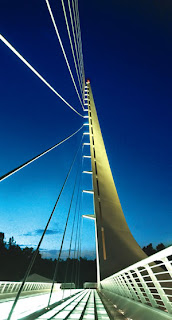
Once in Redding, I can concentrate in coaching volleyball. But obviously I would force our hosts to take us to the world-famous Sundial Bridge over the Sacramento River. The Sundial Bridge, built by renowned Spanish architect Santiago Calatravas, is a beautiful architectural art piece that has become the milestone of Redding. Tons of visitors stop by the Turtle Bay Park to take a few shots of the bridge and enjoy the beautiful scenery and outdoor activities.


http://web.redding.com/specials/sundial/ - photo by Lucas Mobley


One a pleasant evening our hosts take us coaches to see the famous bridge. We watch the people walk by and the transparent waters of Sacramento river run off.

In this trip, I also “learned” how to play poker.

San Ramon, CA – Aug. 13-17

Seeing the Oakland Bay through the plane's window is entertaining. Beautifull views and perfectly squared neighborhoods, hills covered with million-dollar houses. I land to Oakland at the scheduled time. This time there was no delays or driving through the night. Nechia, the Dougherty High School coach and two other camp coaches were waiting to pick me up at the airport. We pass by a sign that says San Leandro. Eyes catching every single detail.

San Ramon is a very wealthy area, big houses and perfectly manicured lawns that looked like painting. Dougherty Valley High School was the most expensive High School ever built in the United States, with a bill going over 600 million dollars you can imagine what type of neighborhood you’ll would have there.

In this camp I work with Kevin Ring who's the head coach of University of California San Diego men’s volleyball team. We have a great time in San Ramon and work pretty well together. It took us a great deal of effort to make the girls understand what working hard really mean. They were mostly freshmen and sophomores, some of them had never played volleyball before.

Our host Nechia made our stay much more comfortable. She is one of those people who have genuine interest in you, she makes you feel special, is very enthusiastic about her job and works really hard to ensure all is going great.

I get back to Provo on Friday night thinking on how Maine would be like.


Eating lobsta in Maine

Biddeford, ME - Aug 20-24

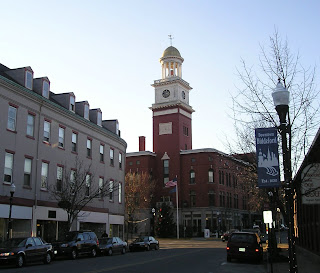
City Hall - Biddeford, ME


What to expect from Maine? Well, I had to google it to see where it was located on a map. All I knew that I was in the east coast, but wouldn’t have thought that it was almost in Canada, in the extreme northeast part of the US.

It was a long journey. I left the Salt Lake City airport at 7.05 am and flew in to Phoenix, Arizona. Then I took a connecting flight to Pittsburgh, Pennsylvania and from there to La Guardia airport in New York. At 11.30 pm, I arrive in Portland, Maine.

The state of Maine is quite unique. It’s covered with tall dark-green trees that reminded me of the Atlantic forest in Brazil.

I went to Maine also determined to eat lobster, which the locals call lobsta. I tell our host that I’d had never eaten lobsta before with hopes of being offered one.

On Wednesday lunch, I had my first Maine lobsta.

It’s quite a messy meal. Suck the meat out the lobsta’s legs. Break their claws, devour the pinkish-white meat. Remember to save the tail for last as it has the best of it.

Everyday after camp, the coaches were invited to one the campers’ house for dinner. It was another opportunity to get to know them. We played games and ate good food.

The girls were crazy! They had so much energy that made me wonder if that was normal. There were many characters in that high school team. Laurie the “English girl”, SKINNY, T-ankle, The Sistas, Borboleta, Sasha Powerhouse.

On our last camp day, we were taken to the Saco Bay. There I ate my first Haddock Sandwich, burned my tongue on hot seafood soup and spilled my Coca-cola over the rocks.

Saturday, August 11, 2007

A Caolha

Um conto que revela não somente as minúcias incompreensíveis do amor incondicional de mãe, mas as dimensões do sentimento humano, complexos e contraditórios.
Júlia Lopes de Almeida revela porque consagra-se como uma das maiores escritoras brasileiras.
Em "A Caolha", escrito em uma época quando escrever era uma arte masculina, Júlia se estabelece pioneira, a abrir caminho para um prolífero legado literário brasileiro.
Disfrutem!


A CAOLHA
por Júlia Lopes de Almeida
foto por leandro justen

A caolha era uma mulher magra, alta, macilenta, peito fundo, busto arqueado, braços compridos, delgados, largos nos cotovelos, grossos nos pulsos; mãos grandes, ossudas, estragadas pelo reumatismo e pelo trabalho; unhas grossas, chatas e cinzentas, cabelo crespo, de uma cor indecisa entre o branco sujo e o louro grisalho, desse cabelo cujo contato parece dever ser áspero e espinhento; boca descaída, numa expressão de desprezo, pescoço longo, engelhado, como o pescoço dos urubus; dentes falhos e cariados.
O seu aspecto infundia terror às crianças e repulsão aos adultos; não tanto pela sua altura e extraordinária magreza, mas porque a desgraçada tinha um defeito horrível: haviam lhe extraído o olho esquerdo; a pálpebra descera mirrada, deixando, contudo, junto ao lacrimal, uma fístula continuamente porejante.

Era essa pinta amarela sobre o fundo denegrido da olheira, era essa destilação incessante de pus que a tornava repulsiva aos olhos de toda gente.

Morava numa casa pequena, paga pelo filho único, operário numa fábrica de alfaiate; ela lavava a roupa para os hospitais e dava conta de todo o serviço da casa inclusive cozinha. O filho, enquanto era pequeno, comia os pobres jantares feitos por ela, às vezes até no mesmo prato; à proporção que ia crescendo, ia-se a pouco e pouco manifestando na fisionomia a repugnância por essa comida; até que um dia, tendo já um ordenadozinho, declarou à mãe que, por conveniência do negócio, passava a comer fora...

Ela fingiu não perceber a verdade, e resignou-se.

Daquele filho vinha-lhe todo o bem e todo o mal.

Que lhe importava o desprezo dos outros, se o seu filho adorado lhe pagasse com um beijo todas as amarguras da existência?

Um beijo dele era melhor que um dia de sol, era a suprema carícia para o triste coração de mãe! Mas... os beijos foram escasseando também, com o crescimento do Antonico! Em criança ele apertava-a nos braços e enchia-lhe a cara de beijos; depois, passou a beijá-la só na face direita, aquela onde não havia vestígios de doença; agora, limitava-se a beijar-lhe a mão!

Ela compreendia tudo e calava-se.

O filho não sofria menos.
Quando em criança entrou para a escola pública da freguesia, começaram logo os colegas, que o viam ir e vir com a mãe, a chamá-lo - o filho da caolha.

Aquilo exasperava-o; respondia sempre:

- Eu tenho nome!

Os outros riam e chacoteavam-no; ele se queixava aos mestres, os mestres ralhavam com os discípulos, chegavam mesmo a castigá-los - mas a alcunha pegou. Já não era só na escola que o chamavam assim.

Na rua, muitas vezes, ele ouvia de uma ou outra janela dizerem: o filho da caolha! Lá vai o filho da caolha! Lá vem o filho da caolha!

Eram as irmãs dos colegas, meninas novas, inocentes e que, industriadas pelos irmãos, feriam o coração do pobre Antonico cada vez que o viam passar!
As quitandeiras, onde iam comprar as goiabas ou as bananas para o lanche, aprenderam depressa a denominá-lo como os outros, e, muitas vezes, afastando os pequenos que se aglomeravam ao redor delas, diziam, estendendo uma mancheia de araçás, com piedade e simpatia:
- Taí, isso é para o filho da caolha!
O Antonico preferia não receber o presente a ouvi-lo acompanhar de tais palavras; tanto mais que os outros, com inveja, rompiam a gritar, cantando em coro, num estribilho já combinado:
- Filho da caolha, filho da caolha!

O Antonico pediu à mãe que não o fosse buscar à escola; e muito vermelho, contou-lhe a causa; sempre que o viam aparecer à porta do colégio os companheiros murmuravam injúrias, piscavam os olhos para o Antonico e faziam caretas de náuseas.

A caolha suspirou e nunca mais foi buscar o filho.
Aos onze anos o Antonico pediu para sair da escola: levava a brigar com os condiscípulos, que o intrigavam e malqueriam. Pediu para entrar para uma oficina de marceneiro. Mas na oficina de marceneiro aprenderam depressa a chamá-lo - o filho da caolha, a humilhá-lo, como no colégio.

Além de tudo, o serviço era pesado e ele começou a ter vertigens e desmaios. Arranjou então um lugar de caixeiro de venda: os seus colegas agruparam-se à porta, insultando-o, e o vendeiro achou prudente mandar o caixeiro embora, tanto que a rapaziada ia-lhe dando cabo do feijão e do arroz expostos à porta nos sacos abertos! Era uma contínua saraivada de cereais sobre o pobre Antonico!

Depois disso passou um tempo em casa, ocioso, magro, amarelo, deitado pelos cantos, dormindo às moscas, sempre zangado e sempre bocejante! Evitava sair de dia e nunca, mas nunca, acompanhava a mãe; esta poupava-o: tinha medo que o rapaz, num dos desmaios, lhe morresse nos braços, e por isso nem sequer o repreendia! Aos dezesseis anos, vendo-o mais forte, pediu e obteve-lhe, a caolha, um lugar numa oficina de alfaiate. A infeliz mulher contou ao mestre toda a história do filho e suplicou-lhe que não deixasse os aprendizes humilhá-lo; que os fizesse terem caridade!
Antonico encontrou na oficina uma certa reserva e silêncio da parte dos companheiros; quando o mestre dizia: sr. Antonico, ele percebia um sorriso mal oculto nos lábios dos oficiais; mas a pouco e pouco essa suspeita, ou esse sorriso, se foi desvanecendo, até que principiou a sentir-se bem ali.
Decorreram alguns anos e chegou a vez de Antonico se apaixonar. Até aí, numa ou outra pretensão de namoro que ele tivera, encontrara sempre uma resistência que o desanimava, e que o fazia retroceder sem grandes mágoas. Agora, porém, a coisa era diversa: ele amava!
Amava como um louco a linda moreninha da esquina fronteira, uma rapariguinha adorável, de olhos negros como veludos e boca fresca como um botão de rosa. O Antonico voltou a ser assíduo em casa e expandia-se mais carinhosamente com a mãe; um dia, em que viu os olhos da morena fixarem os seus, entrou como um louco no quarto da caolha e beijou-a mesmo na face esquerda, num transbordamento de esquecida ternura!

Aquele beijo foi para a infeliz uma inundação de júbilo! Tornara a encontrar o seu querido filho! Pôs-se a cantar toda a tarde, e nessa noite, ao adormecer, dizia consigo:
- Sou muito feliz... o meu filho é um anjo!

Entretanto, o Antonico escrevia, num papel fino, a sua declaração de amor à vizinha. No dia seguinte mandou-lhe cedo a carta. A resposta fez-se esperar. Durante muitos dias Antonico perdia-se em amarguradas conjecturas.

Ao princípio pensava: - É o pudor.

Depois começou a desconfiar de outra causa; por fim recebeu uma carta em que a bela moreninha confessava consentir em ser sua mulher, se ele se separasse completamente da mãe!

Vinham explicações confusas, mal alinhavadas: lembrava a mudança de bairro; ele ali era muito conhecido por filho da caolha, e bem compreendia que ela não se poderia sujeitar a ser alcunhada em breve de - nora da caolha, ou coisa semelhante!

O Antonico chorou! Não podia crer que a sua casta e gentil moreninha tivesse pensamentos tão práticos!
Depois o seu rancor se voltou para a mãe.

Ela era a causadora de toda a sua desgraça! Aquela mulher perturbara a sua infância, quebrara-lhe todas as carreiras, e agora o seu mais brilhante sonho de futuro sumia-se diante dela!
Lamentava-se por ter nascido de mulher tão feia, e resolveu procurar meio de separar-se dela; iria considerar-se humilhado continuando sob o mesmo teto; havia de protegê-la de longe, vindo de vez em quando vê-la à noite, furtivamente...
Salvava assim a responsabilidade do protetor e, ao mesmo tempo, consagraria à sua amada a felicidade que lhe devia em troca do seu consentimento e amor...

Passou um dia terrível; à noite, voltando para casa levava o seu projeto e a decisão de o expor à mãe.

A velha, agachada à porta do quintal, lavava umas panelas com um trapo engordurado. O Antonico pensou:
"Ao dizer a verdade eu havia de sujeitar minha mulher a viver em companhia de... uma tal criatura?" Estas últimas palavras foram arrastadas pelo seu espírito com verdadeira dor. A caolha levantou para ele o rosto, e o Antonico, vendo-lhe o pus na face, disse:
- Limpe a cara, mãe...
Ela sumiu a cabeça no avental; ele continuou:
- Afinal, nunca me explicou bem a que é devido esse defeito!
- Foi uma doença, - respondeu sufocadamente a mãe - é melhor não lembrar isso!
- E é sempre a sua resposta: é melhor não lembrar isso! Por quê?
- Porque não vale a pena; nada se remedeia...
- Bem! Agora escute: trago-lhe uma novidade. O patrão exige que eu vá dormir na vizinhança da loja... já aluguei um quarto; a senhora fica aqui e eu virei todos os dias saber da sua saúde ou se tem necessidade de alguma coisa... É por força maior; não temos remédio senão sujeitar-nos!...

Ele, magrinho, curvado pelo hábito de costurar sobre os joelhos, delgado e amarelo como todos os rapazes criados à sombra das oficinas, onde o trabalho começa cedo e o serão acaba tarde, tinha lançado naquelas palavras toda a sua energia, e espreitava agora a mãe com um olhar desconfiado e medroso.

A caolha se levantou e, fixando o filho com uma expressão terrível, respondeu com doloroso desdém:
- Embusteiro! O que você tem é vergonha de ser meu filho! Saia! Que eu também já sinto vergonha de ser mãe de semelhante ingrato!
O rapaz saiu cabisbaixo, humilde, surpreso da atitude que assumira a mãe, até então sempre paciente e cordata; ia com medo, maquinalmente, obedecendo à ordem que tão feroz e imperativamente lhe dera a caolha.

Ela o acompanhou, fechou com estrondo a porta, e vendo-se só, encostou-se cabaleante à parede do corredor e desabafou em soluços.

O Antonico passou uma tarde e uma noite de angústia.

Na manhã seguinte o seu primeiro desejo foi voltar à casa; mas não teve coragem; via o rosto colérico da mãe, faces contraídas, lábios adelgaçados pelo ódio, narinas dilatadas, o olho direito saliente, a penetrar-lhe até o fundo do coração, o olho esquerdo arrepanhado, murcho - murcho e sujo de pus; via a sua atitude altiva, o seu dedo ossudo, de falanges salientes, apontando-lhe com energia a porta da rua; sentia-lhe ainda o som cavernoso da voz, e o grande fôlego que ela tomara para dizer as verdadeiras e amargas palavras que lhe atirara no rosto; via toda a cena da véspera e não se animava a arrostar com o perigo de outra semelhante.
Providencialmente, lembrou-se da madrinha, única amiga da caolha, mas que, entretanto, raramente a procurava.
Foi pedir-lhe que interviesse, e contou-lhe sinceramente tudo o que houvera.
A madrinha escutou-o comovida; depois disse:
- Eu previa isso mesmo, quando aconselhava tua mãe a que te dissesse a verdade inteira; ela não quis, aí está!
- Que verdade, madrinha?
- Encontraram a caolha a tirar umas nódoas do fraque do filho - queria mandar-lhe a roupa limpinha. A infeliz se arrependera das palavras que dissera e tinha passado a noite à janela, esperando que o Antonico voltasse ou passasse apenas... Via o porvir negro e vazio e já se queixava de si! Quando a amiga e o filho entraram, ela ficou imóvel: a surpresa e a alegria amarraram-lhe toda a ação.
A madrinha do Antonico começou logo:
- O teu rapaz foi suplicar-me que te viesse pedir perdão pelo que houve aqui ontem e eu aproveito a ocasião para, à tua vista, contar-lhe o que já deverias ter-lhe dito!

- Cala-te! - murmurou com voz apagada a caolha.
- Não me calo! Essa pieguice é que te tem prejudicado! Olha, rapaz! Quem cegou a tua mãe foste tu!

O afilhado tornou-se lívido; e ela concluiu:
- Ah, não tiveste culpa! Eras muito pequeno quando, um dia, ao almoço, levantaste na mãozinha um garfo; ela estava distraída, e antes que eu pudesse evitar a catástrofe, tu o enterraste pelo olho esquerdo! Ainda tenho no ouvido o grito de dor que ela deu!
O Antonico caiu pesadamente de bruços, com um desmaio; a mãe acercou-se rapidamente dele, murmurando trêmula:
- Pobre filho! Vês? Era por isto que eu não queria dizer nada!

Sunday, August 5, 2007

Sujeito

Sujeito
por leandro justen

Voracidade do tempo que passa mas que não deixa resquícios dos segundos passados, das rugas na testa, da oxidação do portão da frente de casa. O tempo passa sem a interrogação do que pode ser. De uma indagação desnecessária. De um sentimento jamais expressado. De um orgasmo reprimido. Da gente feia que se penteia, maquia e tenta esconder os dentes mal formados, o formato inexpressivo do rosto, o nariz quase inexistente. De um olhar que não atrai atenção e que se esconde num esboço de sorriso demasiadamente singelo.

O sujeito jamais fora bonito de nada. Um rabisco no papel. Amassado. Jogado fora. Sem natureza que evoluciona. Sem a coragem dos épicos mentirosos. Nada, absolutamente nada lhe fazia sorrir de alma. Sorria por conveniência diante daquilo alheio. E andava, andava. Sem permissão de gente humana, ele seguia chorando a vida que caíra por casualidade e infortúnio naquele corpo cariado, esquelético. Sem cores que lhe desse ar de alegria. Não era branco, nem preto. Opaco por DNA. Feio por destino e às vezes feliz sem motivo.

O sujeito anda sem paradeiro aos passos curtos e rápidos dessa multidão asombrada que se apressa para não perder o coletivo das duas horas da tarde. Pára no semáforo que anseia um verde sangue, de libertade e desoclusão. O verde é para os carros que aceleram os motores ruidosos desta metrópole de muitos donos. A multidão pára assustada, apressada, no vermelho do semáforo. Alguns cortam a avenida expressa por entre os carros acelerados, sobre o asfalto quente das quase duas horas da tarde de uma segunda-feira atrasada.


O sujeito, logo ali, a um passo de uma mãe que segura o seu recém-nascido nos braços, não pára, seguindo adiante, passos curtos. Os carros tentam desviar daquele corpo franzino, feio, que se projeta continuamente para o centro daquela avenida expressa, onde às 10 horas da noite as prostitutas cuidam dos trabalhadores da construção civil.

Mas um passo, mais outro. O sujeito, sem muita objeção, atropela um carro que vinha à velocidade dos dias contemporâneos. Aquele corpo sem dono, sem desejo, sucumbe ao impacto do carro vermelho, que vinha sendo conduzido por um senhora professora que jamais houvera sentido o cheiro de morte tão presente, tão vivo. O automóvel vermelho ainda tivera audácia de passar por cima daquele monte de pele sem uso, manchando a avenida que leva nome de presidente e que fora palcos de muitos contos, muitos destes inacabados.

A multidão aproxima-se do corpo ensanguentado, imóvel, olhos parcialmente abertos olhando pro céu que se escondia acima dos prédios antigos do centro da cidade. Anônimos respiram o sangue ralo que exalava e fritava no asfalto quente. O sinal abre aos pedestres que se desagregam e instantes depois se esquecerão da imagem crua da carne humana.